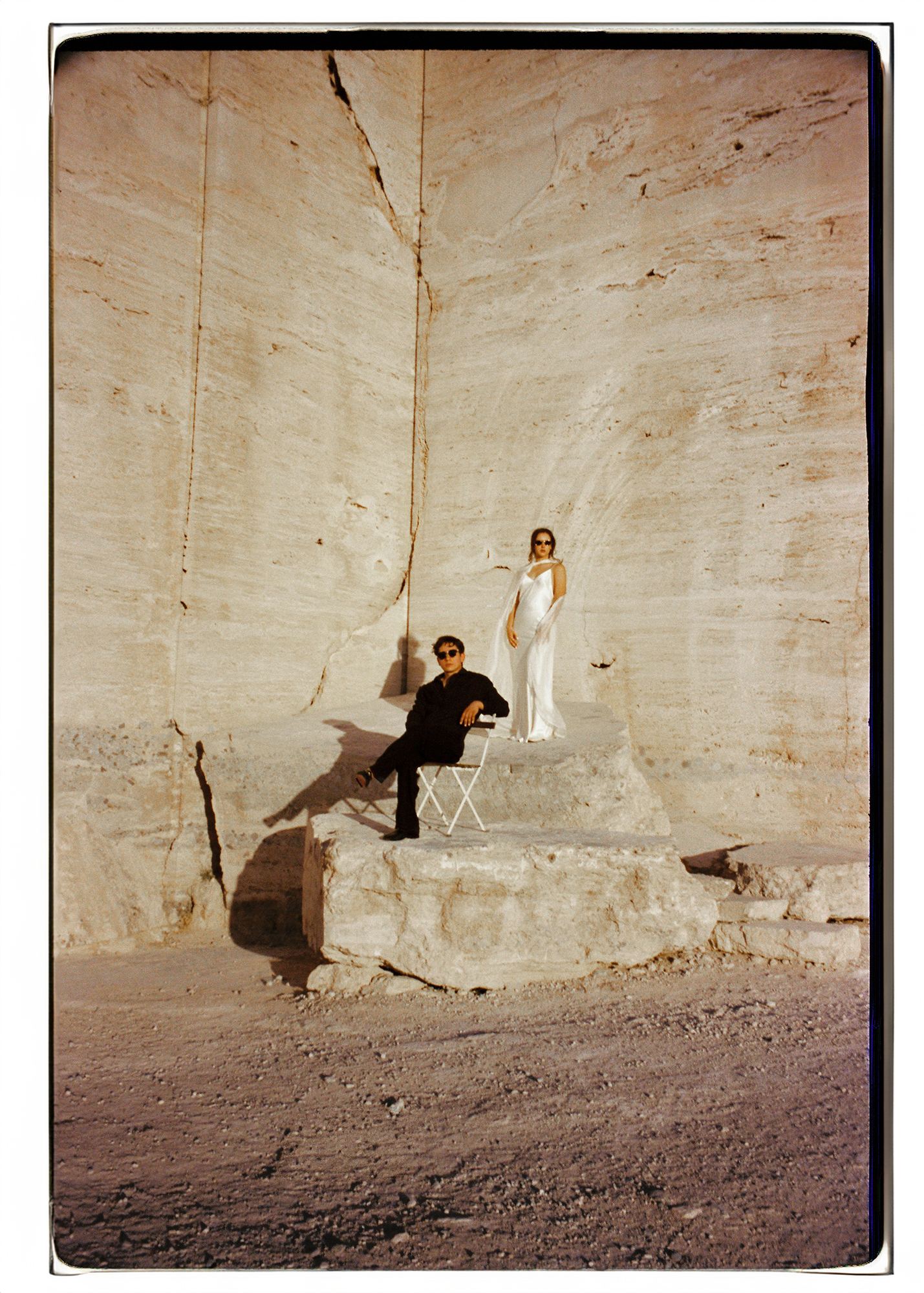
Every frame on this page came off a roll of 35mm film. The rough black borders aren't a filter — they're the physical edge of the negative, scanned exactly as it came out of the camera. I want to explain why, in an age of infinite digital frames, I still load film at weddings.
Digital gave photographers everything: instant feedback, unlimited frames, recoverable mistakes. And somewhere in all that abundance, something quietly slipped away — the cost of pressing the shutter. When a photograph costs nothing, it's easy to take three thousand of them and decide later. Film doesn't let you decide later.
Thirty-six frames make you honest
A roll of 35mm gives you thirty-six chances. That's it. Every frame has to be a decision, not a reflex. You wait. You watch. You let the moment ripen before you commit — because there's no burst mode to hide behind, and no screen on the back telling you it's safe.
Film doesn't make the photograph better. It makes the photographer more honest — and that shows up in the frame.
The opening photograph is one exposure. Not the best of forty — one. I saw the light against the stone, asked the couple to hold still for a breath, and made the picture. That kind of intention is hard to fake, and couples can feel it in the final image even if they can't name why.
Grain is not noise
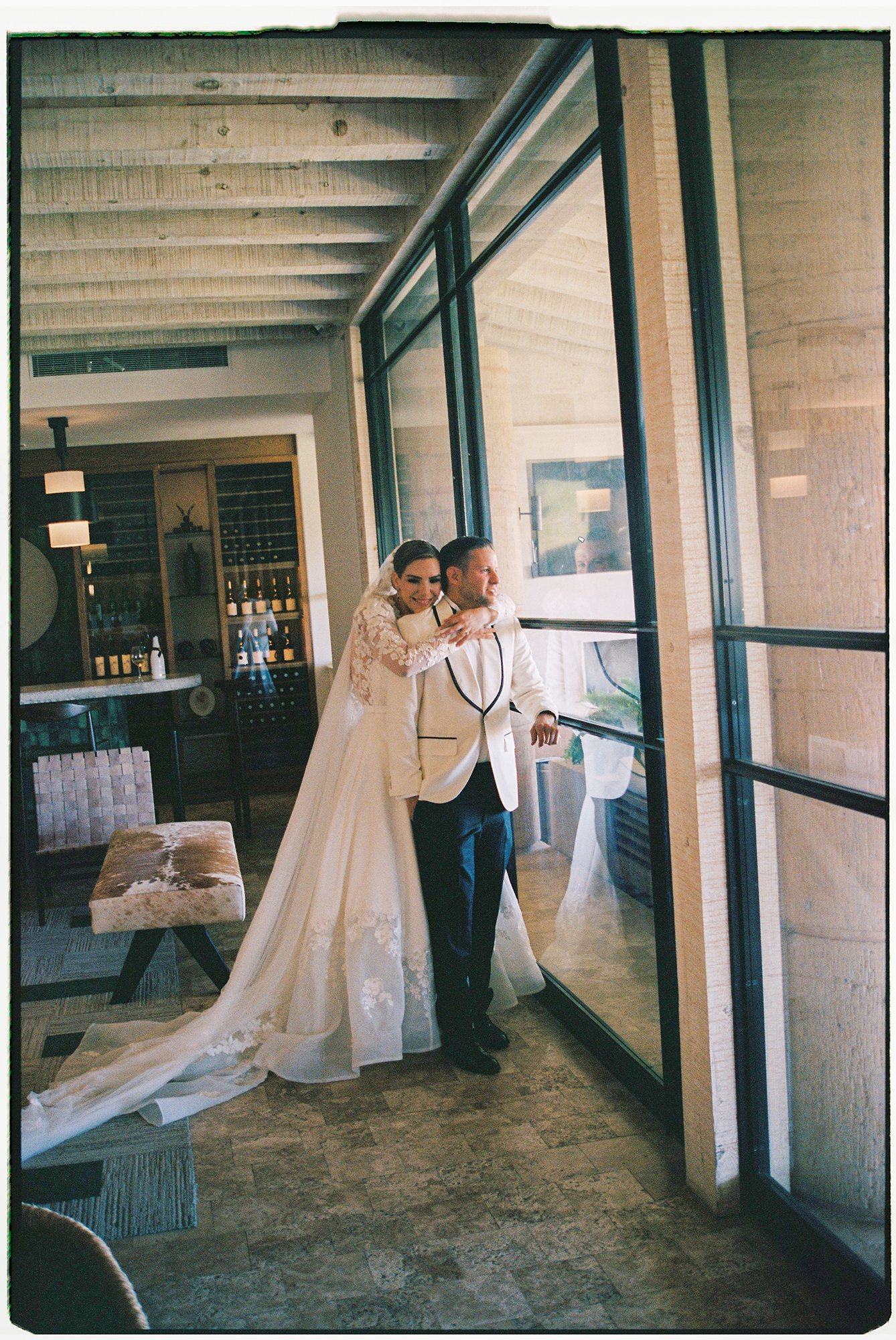
Digital noise is an error — the sensor guessing in the dark. Film grain is structure. It's the physical texture of silver crystals that reacted to the light in the room, which is why it renders skin, fabric, and shadow with a softness that digital sharpening can't reproduce and presets only imitate.
Look at the window photograph: the highlights roll off gently instead of clipping, the whites of the dress hold detail, and the whole frame has a warmth that came from the emulsion, not from an editing slider. That's what people mean when they say a photo "feels like film." It isn't a color palette. It's physics.
Film loves a party
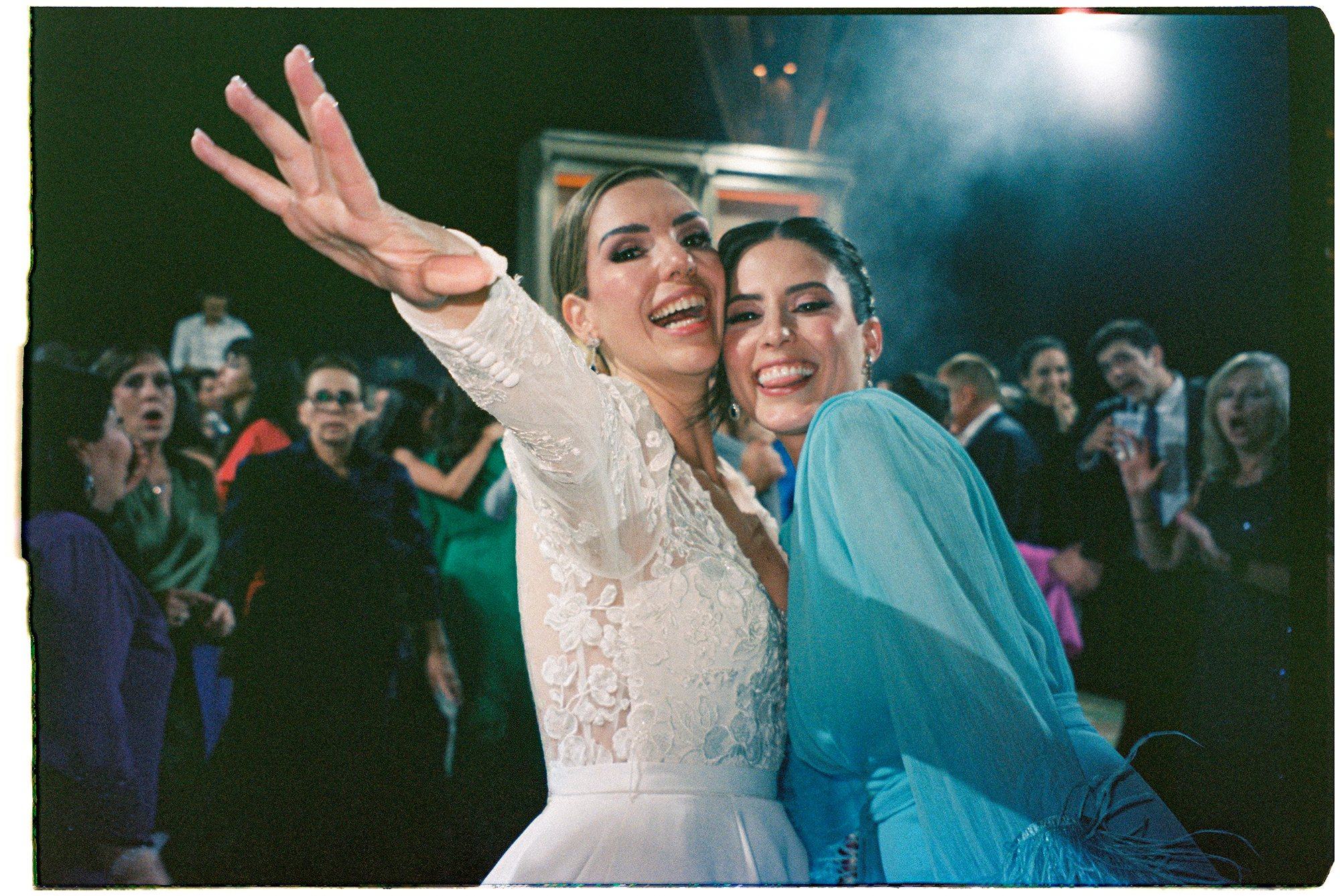
There's a reason the flash-on-film party photo is having a moment: it looks like memory. Direct flash, honest color, a border that says this actually happened. No cinematic grade, no skin smoothing — the night as it was, slightly imperfect and completely alive.
These are the frames that end up printed. Not because they're technically flawless, but because twenty years from now they'll still look like the night felt.
How it works on a wedding day
To be clear: I don't photograph entire weddings on film. Digital carries the day — it's faster, sharper in low light, and I would never gamble your ceremony on a single point of failure. Film is the layer on top: a few rolls across the weekend, spent deliberately on the moments where its character earns its place. Portraits in open shade. The quiet minutes before the ceremony. The dance floor once it stops being polite.
You receive both. The complete digital gallery, and alongside it a set of film scans with their borders intact — a small, deliberate edit of frames that were each, individually, chosen.
If film belongs in your wedding, let's talk about how it fits your day.
Start the conversation